Loading image...


Indoor Fireplaces
Designed for maximum indoor flexibility
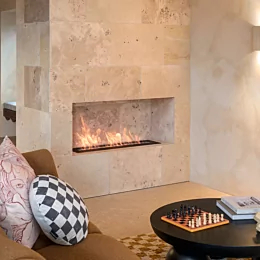
Complement any room with an eco-friendly ethanol indoor fireplace. EcoSmart Fire offer a premium bioethanol indoor fireplace range, with design integrity features at its core.
Indoor Ranges









Models
Showing 18 items of 60
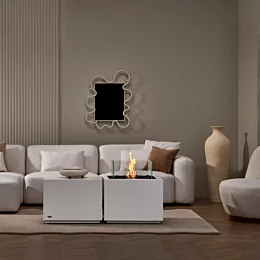
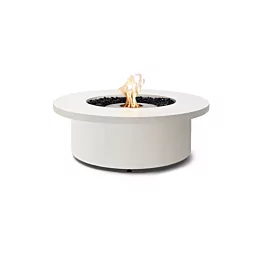
Sidecar 24 Fire Table · EcoSmart Fire
Chaser 38 Fire Table · EcoSmart Fire
Base 30 Fire Table · EcoSmart Fire
Base 40 Fire Table · EcoSmart Fire
Ark 40 Fire Table · EcoSmart Fire
Mimosa 40 Fire Table · EcoSmart Fire
Mojito 40 Fire Table · EcoSmart Fire
Vertigo 40L Fire Table · EcoSmart Fire
Vertigo 50L Fire Table · EcoSmart Fire
Daiquiri 70VL Fire Table · EcoSmart Fire
Daiquiri 70L Fire Table · EcoSmart Fire
Manhattan 50 Fire Table · EcoSmart Fire
Martini 50 Fire Table · EcoSmart Fire
Cosmo 50 Fire Table · EcoSmart Fire
Tequila 50 Fire Table · EcoSmart Fire
Wharf 65 Fire Table · EcoSmart Fire
Gin 90 Low Fire Table · EcoSmart Fire
Gin 90 Chat Fire Table · EcoSmart Fire





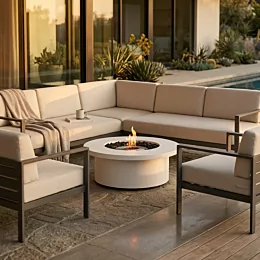


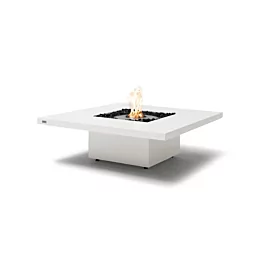


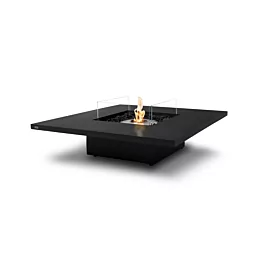


Loading image...
Clean-burning
Bioethanol produces no harmful emissions, just heat, steam and carbon dioxide which is re-absorbed by plants, this means no soot, no smoke, no ash and no mess.
Efficiency over 90%
No flue or chimney means that the heat generated by the fireplace during combustion isn’t lost up the chimney.
Loading image...

Freestanding models
Cleverly refashioning the traditional fireplace concept into a piece of flexible fire furniture means that you can enjoy the simple pleasures of an open fire whenever and wherever you want it.
Loading image...


Built-in models
EcoSmart Fire has a design solution for custom-made, built-in fireplaces to fit countless design briefs, floor plans, indoor and outdoor spaces.


Loading image...


Installation flexibility
EcoSmart Fires can be incorporated at any stage of your interior decorating, renovating or building works.
Design freedom
No need for cabling, gas connecting, chimneys or flues provides creative freedom for homeowners and interior designers.
Loading image...

Add value to your property
The presence of a fireplace in your house increases the value of your home.
Loading image...

 © Alex Wallace Photography
Thoroughly tested worldwide
Our collection has been thoroughly tested against a number of global standards and is O-TL Listed in accordance with UL 1370 in the USA, certified in accordance with EN16647 in Europe and the UK, and satisfies the ACCC Safety Mandate for Australia.
Styled by Our Clients
Loading image...

Loading image...

Loading image...

Loading image...

Loading image...
Loading image...

Loading image...

Loading image...

Loading image...

Related Collections
Learn More
Indoor Fireplaces
Indoor Fire Pits
Indoor Ethanol Fireplaces
FAQ's
Are permits required for indoor fire pits?
Building permits for portable indoor fire pits depend on your location and local regulations; EcoSmart Fire recommends verifying requirements with your local building authority before installation.
Most jurisdictions permit certified bioethanol fireplaces indoors, though some require formal approval. EcoSmart Fire products meet international safety standards (UL 1370 in the USA, EN 16647 in Europe and the UK) that building authorities commonly recognise as compliance documentation.
Building permits and product safety certifications serve different purposes. A product certification (like UL-listing) proves the fireplace performs safely when used as designed. A building permit is your local authority's approval to install that product in your specific building. These are complementary: certification doesn't eliminate the need to check local rules, but it simplifies the process because certified products come with tested safety data that reviewers trust.
Bioethanol fireplaces hold a permitting advantage over gas or wood-burning installations because they require no flue, chimney, gas lines, or structural modifications. Traditional fireplaces often trigger extensive architectural reviews; ventless bioethanol units typically require only basic documentation.
Before purchasing, contact your local building authority with your product's certification documentation. Most approvals proceed quickly, and some areas may not require any formal approval at all.
What is the minimum clearance required around an indoor fire pit?
An indoor portable fire pit using bioethanol requires a minimum 600 mm [23.6 in] of clear space from stable furniture, 2,000 mm [78.7 in] of overhead clearance from movable objects, and at least 12.5 mm [0.5 in] of air space beneath the unit.
- Sides: 600 mm [23.6 in] from the flame to fixed, stable furniture such as lounges and dining chairs
- Above: 2,000 mm [78.7 in] from the flame to any overhead item susceptible to movement, including branches, curtains, or paper
- Underside: 12.5 mm [0.5 in] minimum air space between the ground surface and the underside of the appliance sidewalls
- Burner base: must not make direct contact with any flammable material
Place the fire pit on a flat, stable, non-combustible surface. Grass, artificial turf, carpet, rock, and uneven surfaces are not suitable. Use the articulating feet to achieve a level, stable position and to maintain the required underside air gap.
These clearances apply to all bioethanol fire pit and fire table models. Minimum room size requirements, which govern indoor air quality, are a separate specification and depend on the burner fitted.
What safety features should I look for in an indoor fireplace?
A linear design indoor fireplace combines clean architectural lines with precisely engineered safety features. When evaluating any indoor bioethanol fireplace, look for the following markers of a certified product.
Independent certification is the primary signal. EcoSmart Fire burners are O-TL listed to UL 1370 and were tested by BSI to EN 16647:2015.
Quality indoor fireplaces include several engineered burner safeguards:
- Manual shut-off mechanism for controlled flame termination
- Burner lip design that prevents accidental obstruction of the combustion zone
- Sealed lid cover to exclude dust and debris from the fuel tank when idle
- Flame arrestor spouts on fuel containers to prevent backflash during refilling
- Toughened glass windscreen as a required physical barrier during operation
- Minimum 60-minute cooling period before refuelling
A zero-clearance rating means the unit can be installed against combustible wall materials without structural modifications, a key safety design outcome for linear built-in installations.
Can you get real flames indoors without smoke or a chimney?
Yes, bioethanol fireplaces produce real flames indoors without smoke, ash, or the need for a chimney or flue. When bioethanol burns, it creates only heat, water vapour, and a small amount of carbon dioxide, with no soot, no residue, no complex ventilation infrastructure.
Without a flue, the design possibilities open up dramatically. Architects and homeowners can place bioethanol fireplaces anywhere: as linear installations across walls, statement surrounds in island kitchens, double-sided dividers between rooms, or zero-clearance inserts recessed into cabinetry. The flame becomes a sculptural focal point rather than a structural constraint.
EcoSmart Fire's bioethanol fireplaces sustain a real, orange flame while maintaining indoor air quality. The burner families (AB, XL) deliver consistent flame performance. Because there's no chimney requirement, installation is straightforward, with no structural engineering, no coordination with flue contractors, only design freedom.
What are the benefits of owning an indoor fireplace?
An indoor fireplace brings together three dimensions of everyday luxury: it creates genuine warmth and ambience, serves as an architectural focal point that anchors a room, and operates without the constraints of traditional fireplaces, with no chimney, no gas lines, and no seasonal limitations.
Bioethanol fireplaces from EcoSmart Fire combine clean-burning flame with sculptural form. Whether you choose a linear design that stretches across a feature wall, a statement surround that frames the fire, or a double-sided installation that divides space, the fireplace becomes more than heating; it becomes the room's gravitational centre. Guests naturally gather around it, the way they do with traditional hearths, and conversations extend.
The flexibility is distinctive. Because these fireplaces don't require structural venting or fuel lines, architects and designers integrate them into custom cabinetry, floating walls, or built-ins that would be impossible with conventional models. The flame burns for 8 to 13 hours per refill, depending on the burner size, so you get uninterrupted ambience during dinner parties and evenings without residue or maintenance.
The real benefit? Your fireplace becomes a year-round extension of your living space, not something that sits dormant for half the year. Clean-burning, design-driven, and entirely yours to position.
Do indoor ethanol fireplaces produce steam or condensation?
Indoor ethanol fireplaces do produce water vapour during combustion, alongside heat and carbon dioxide. However, condensation on windows, walls, or other surfaces is uncommon under normal operating conditions, and the concern is largely overblown.
The amount of moisture released is modest and dissipates naturally when a room has adequate air circulation. Most indoor spaces have sufficient ventilation through windows, doors, and mechanical systems to prevent moisture accumulation. Think of it this way: the water vapour your fireplace produces is comparable to what a single person exhales or what a shower produces. It is a byproduct of the clean combustion process, not a source of excess humidity.
Condensation becomes relevant only in extremely enclosed spaces with poor ventilation, where multiple sources of moisture already exist (cooking, multiple occupants in a small sealed room). In such rare cases, simply opening a window or using modest air circulation solves the issue entirely. When you follow EcoSmart Fire's ventilation guidelines for your room size, which account for both oxygen consumption and moisture dispersal, condensation simply doesn't occur.
Can indoor ethanol fireplaces be installed during renovation versus new construction?
Yes, indoor ethanol fireplaces are equally suited to renovation and new construction projects thanks to their clean-burning, zero-clearance design that requires no chimney, gas line, or venting infrastructure. This vent-free architecture eliminates the structural and mechanical constraints that traditionally locked fireplaces into new-build scenarios.
The flexibility comes from the freestanding versus built-in choice you can make on any project timeline. Freestanding models deploy in 1-5 hours with no framework preparation, making them ideal for renovation work where structural modifications are impractical or costly. Built-in configurations integrate into finished walls or cabinetry, offering the same ventless simplicity with seamless integration, equally viable during construction or renovation phases. Both require only a self-supporting framework opening above the appliance; there is no load-bearing requirement.
EcoSmart Fire positions its range as "ideal for new construction and remodel" precisely because the technology itself is timing-agnostic. Whether you're installing during rough-in framing or mid-renovation, you're not constrained by chimney runs, gas routing, or HVAC modifications. This removes approximately 80% of the structural and trade coordination overhead you'd face with traditional fireplaces, accelerating schedules and reducing costs across both scenarios.
The real decision on renovation versus new build is architectural: how you want the fireplace to appear and function within the finished space, not whether you can install it at all.
Can an indoor fire pit be used in an apartment?
Yes, an indoor bioethanol fire pit can work well in an apartment, provided you have a room large enough and permission from your building management or landlord. EcoSmart Fire designs many models specifically for indoor apartment living, with no need for structural modifications, flue installation, or gas lines.
Apartment suitability depends on room volume. A smaller bioethanol fire pit using the AB3 burner requires a minimum of 40 m³ [1,413 ft³], which fits a typical bedroom or lounge. Larger models with an AB8 burner need 116 m³ [4,096 ft³], comparable to a spacious master bedroom or open-plan living area. You'll also need at least 600 mm [23.6 in] clearance from the flame to furniture and walls, and 2,000 mm [78.7 in] of overhead clearance to ceilings.
Before purchasing, confirm with your building manager, body corporate, or landlord that bioethanol fire pits are permitted under your lease or building by-laws. Some apartments restrict open flames, even clean-burning ones, or impose insurance requirements. Many buildings approve them once they understand there's no chimney, no gas installation, and no structural work involved.
Freestanding models suit renters well, as they can be repositioned or removed without leaving permanent marks or damage. This flexibility appeals to both you and future property owners.
How much ventilation is required for an indoor ethanol fireplace?
EcoSmart Fire's clean-burning bioethanol fireplaces require a minimum room volume based on burner size, ensuring safe combustion and proper dispersal of byproducts. Smaller burners like the AB3 require at least 40 m³ [1,413 ft³], while larger models such as the XL900 need 110 m³ [3,885 ft³] and the AB8 requires 116 m³ [4,097 ft³].
Bioethanol combustion consumes oxygen from the room and releases heat, steam, and carbon dioxide. Adequate room volume allows these byproducts to disperse naturally without accumulating to unsafe levels. The specific volume thresholds are verified against international safety standards: UL 1370 (USA), EN 16647 (Europe/UK), and ACCC certification (Australia).
To size your space correctly, measure your room length, width, and height to calculate cubic metres, then match your intended burner size to its corresponding minimum volume. Most standard living rooms, dining areas, and larger bedrooms easily meet these requirements; your installer or product documentation will confirm the specific threshold for your chosen burner.
Can indoor fire pits be used year-round?
Yes, EcoSmart Fire's freestanding or built-in bioethanol fire pits perform consistently indoors year-round without seasonal limitations. Unlike traditional fireplaces that depend on external venting and seasonal installation, bioethanol systems produce only heat, steam, and CO2, with all combustion managed safely via natural ventilation in rooms meeting EN 16647 specifications.
Your fire pit delivers the same ambience and warmth whether you're using it for summer aesthetics or cooler-month supplementary heating. Burn times stay consistent at 6 to 10 hours per fill. Freestanding models can be repositioned seasonally if your interior layout shifts.
EcoSmart Fire's systems are engineered for consistent indoor performance, backed by EN 16647 certification and over 20 years of global installations.